



File an Injunction Against Harassment in Arizona via AZPOINT, No Fee

You can seek an Injunction Against Harassment in Arizona when someone has committed a series of harassing acts, or one act of sexual violence, against you. Start the process right away through the AZPOINT portal or in person at any Arizona courthouse. Understand that the order does not take effect until the defendant is served, and once served, it typically stays valid for one year.
TL;DR:
- Filing a harassment injunction requires at least two specific acts that cause serious alarm or annoyance, or a single act of sexual violence, to qualify.
- The injunction is valid for one year after the defendant is served, which must be done by law enforcement or a licensed process server, not by the petitioner.
- Evidence such as messages, photos, call logs, witness contact info, and police reports significantly strengthen your case at the hearing.
- Strong petitions include a detailed timeline, corroboration, and a clear safety plan; self-representation is feasible but challenging if contested or complex.
- Service delays and rushed hearings are common pitfalls, so careful preparation and possibly professional legal help improve chances of a successful injunction.
Table of Contents
- What Is an Injunction Against Harassment Under Arizona Law?
- Who Qualifies for a Harassment Protection Order in Arizona?
- How Do You File for an Injunction Against Harassment in Arizona?
- What Happens After You File? Service, Hearings, and Duration
- What Evidence Should You Bring, and How Do You Prepare Safely?
- How Much Does It Cost to File an Injunction Against Harassment?
- What Should You Realistically Expect Before Walking Into Court?
- How Can High Desert Family Law Group Help With Your Petition?
- What People Get Wrong About Filing on Their Own
- Sources
What Is an Injunction Against Harassment Under Arizona Law?
Arizona defines harassment narrowly, but the threshold isn’t as high as most people assume. Under A.R.S. § 12-1809, a court can grant an injunction when a person has engaged in a “series of acts” (courts generally read that as two or more) that seriously alarm, annoy, or harass you and serve no legitimate purpose. A single act of sexual violence also qualifies on its own, with no repeated pattern required.
An Injunction Against Harassment is available when there is a series of acts, at least two, that would seriously alarm, annoy, or harass a specific person, and one act of sexual violence alone is enough to qualify.
There’s no requirement that you and the other person ever had a relationship. Neighbors, coworkers, acquaintances, and total strangers all qualify. Any adult can petition, and a parent or guardian can file on behalf of a minor. Courts can order no contact, direct the defendant to stay away from your home, work, or school, and add other conditions tailored to the situation Maricopa County outlines.
Who Qualifies for a Harassment Protection Order in Arizona?
Real-world qualifying conduct is broader than people expect. Judges routinely grant injunctions for behavior like these:
- A neighbor who repeatedly confronts you, photographs your property, or leaves threatening notes.
- An ex-coworker who won’t stop texting, calling, or showing up uninvited after you’ve told them to stop.
- Someone sending relentless messages across multiple platforms, especially after being asked to disengage.
- A stranger or acquaintance who commits a single act of sexual violence, which alone satisfies the statute.
Courts want to see a genuine pattern with no legitimate purpose, not an isolated disagreement. Judges tend to deny petitions when the conflict looks mutual, when contact served a lawful reason (a landlord discussing a lease, for instance), or when there’s only one minor incident without sexual violence involved. Workplace harassment between current coworkers sometimes routes through a separate injunction process, so mention your employment relationship when you file so the clerk can direct you correctly.
How Do You File for an Injunction Against Harassment in Arizona?
Most petitioners start with AZPOINT, the state’s free online filing portal. It walks you through a guided interview, saves your draft for 90 days, and generates a confirmation number you bring to the courthouse to finish filing.
If you’d rather file on paper, courts provide the forms at no charge: the Plaintiff’s Information Sheet, the Petition for Injunction Against Harassment, and a Service Information sheet. You can also print them in advance from ArizonaCourtHelp.
- Complete the AZPOINT interview or fill out the paper petition, describing each incident with dates and details.
- Gather your ID, the defendant’s full legal name and address if known, and a written timeline of incidents.
- Bring copies of any evidence, texts, photos, voicemails, or police reports, plus your AZPOINT confirmation number if you filed online.
- Go to your local municipal, justice, or superior court and ask the clerk about same-day judge availability.
- Meet with the judge, who reviews your petition and decides whether to issue the order.
Pro Tip: Call the courthouse before you go and ask what time judges typically review harassment petitions that day. Some courts only hear them at specific hours, and showing up outside that window means a wasted trip.
What Happens After You File? Service, Hearings, and Duration
A judge can issue your injunction immediately and without the defendant present, known as an ex parte order, based solely on your petition. The order carries no legal force until someone actually delivers it to the defendant.
- Law enforcement, a constable, sheriff, or a licensed process server must complete service. You cannot serve the papers yourself.
- The defendant has the right to request a hearing, and courts must schedule one within 10 days of that request.
- Once served, the injunction stays in effect for one year, according to Maricopa County Justice Courts.
That one-year window is shorter than an Order of Protection, which runs for two years and applies to domestic relationships rather than general harassment. Mark your calendar as soon as service happens, since the clock only starts running then, not on the day you filed.
What Evidence Should You Bring, and How Do You Prepare Safely?
Build a written, chronological timeline before your court date: date, time, location, and a short description of each incident. Organize supporting material as exhibits so the judge can follow along without confusion.
- Screenshots of texts, emails, or social media messages, saved with visible timestamps.
- Voicemails or call logs showing frequency and content of unwanted contact.
- Photos of property damage, unwanted deliveries, or the person appearing where they shouldn’t.
- Names and contact information for any witnesses.
- Copies of any police reports already filed.
Expect the judge to ask you direct questions about specific incidents, so practice describing events in plain, factual language rather than emotional generalities. AZPOINT’s guidance and most court self-help pages also recommend contacting a victim advocate before you file, both for emotional support and for help thinking through safety logistics.
Pro Tip: Never attempt to personally hand the defendant their court papers, even if you see them at the grocery store. Improper service can delay your case and, in some situations, put you at greater risk.
How Much Does It Cost to File an Injunction Against Harassment?
Filing the petition itself costs nothing. There’s no filing fee for an Injunction Against Harassment anywhere in Arizona.
- Service fees may apply when law enforcement or a process server delivers the papers, though courts routinely waive these fees in cases involving sexual violence.
- You can ask the clerk for a fee waiver or request that the court defer service costs if payment would be a hardship.
- If cost remains a barrier, ask about sheriff-based service first since it’s often cheaper than a private process server.
What Should You Realistically Expect Before Walking Into Court?
Petitions succeed or fail based on specificity. A vague claim that someone “won’t leave me alone” rarely moves a judge. A timeline with five dated, described incidents, corroborated by screenshots or a witness, almost always does.
We’ve seen strong petitions built around three things: a clear chronological record, some form of outside corroboration, and a safety plan the petitioner had already thought through before arriving at the courthouse. Weak petitions tend to skip all three and rely on the judge just taking their word for it.
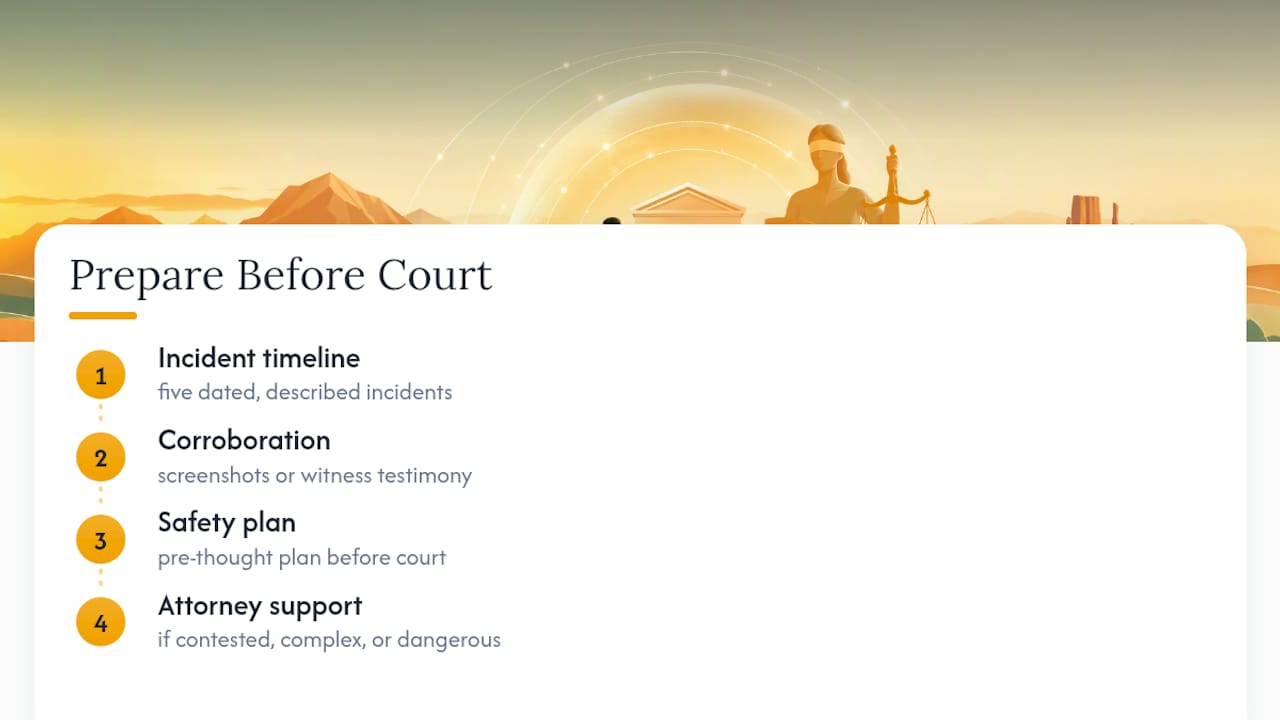
Filing on your own works fine for straightforward cases. But if the defendant is likely to contest the hearing, if there’s a parallel criminal case running alongside your petition, if the evidence is complicated, or if you’re genuinely afraid of retaliation, an attorney’s presence at the hearing changes the dynamic considerably. Courts move fast, and a lawyer who’s argued these hearings before knows what a judge is listening for.
How Can High Desert Family Law Group Help With Your Petition?
Filing alone with a stack of forms and a ten-minute hearing window is stressful, especially when the person you’re afraid of might show up and contest everything you’ve written. Highdesertfamilylawgroup helps Scottsdale-area clients draft stronger petitions, prepare courtroom testimony, and build a safety plan around the filing, so you’re not walking into that hearing guessing what the judge needs to hear.

A consultation with Highdesertfamilylawgroup typically covers your incident timeline, available evidence, and whether your situation calls for an injunction, an Order of Protection, or another remedy entirely. Bring your timeline, any screenshots or messages, and a list of witnesses if you have them. If your harassment case is tangled up with a divorce, custody dispute, or other family law matter, our team at Highdesertfamilylawgroup can handle both simultaneously rather than sending you elsewhere. If the order later needs to be modified or extended, that’s also something our attorneys can help with once the initial process is behind you. Explore the types of family lawyers who can represent you and reach out to schedule a consultation before your next court date.
What People Get Wrong About Filing on Their Own
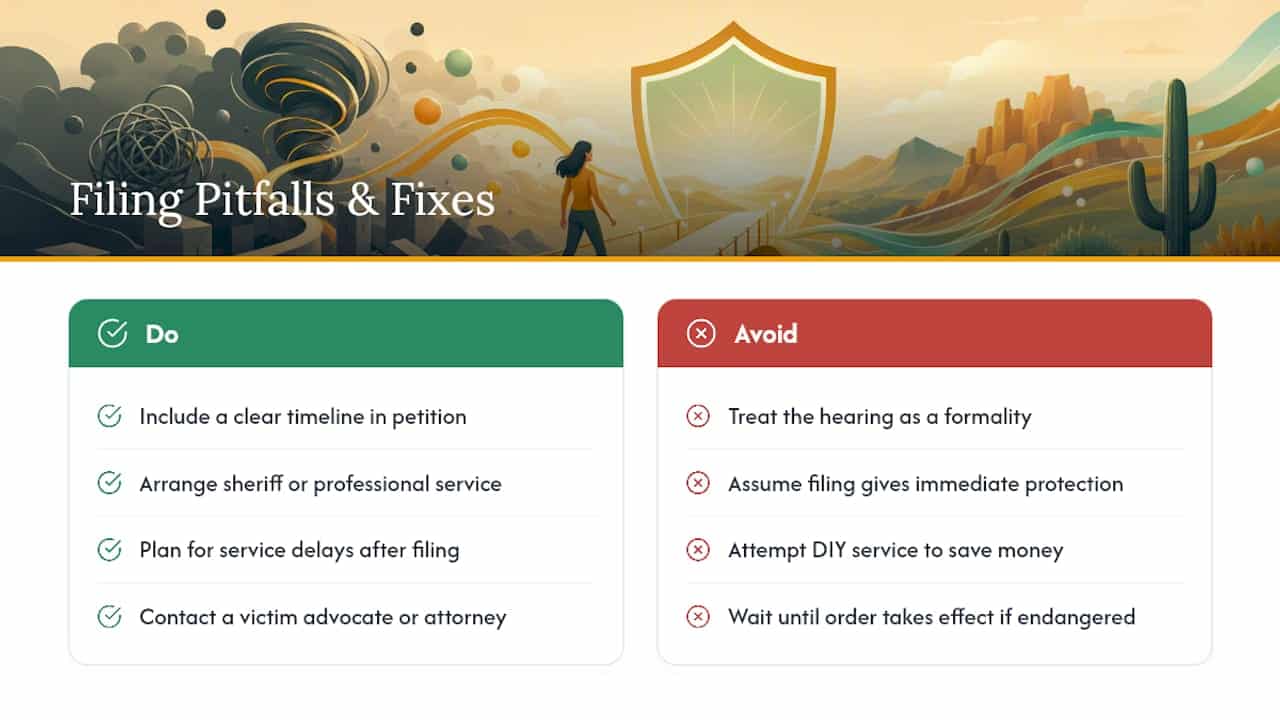
Most people treat the injunction hearing like a formality, something you file and forget about until a piece of paper shows up in the mail. That’s the biggest misjudgment we see. Judges are making a real legal decision under real time pressure, often reviewing several petitions back to back, and the ones that get approved cleanly are almost always the ones with a timeline instead of a narrative.
The other overlooked piece is service. People assume once they’ve filed, they’re protected. They’re not, not until someone physically delivers those papers to the defendant. I’ve watched cases stall for weeks because a petitioner tried to save money by attempting service themselves, which courts won’t accept, or because they didn’t realize sheriff service can take longer than expected in busy counties. Plan for that gap. If you’re in danger during that window, that’s exactly when a victim advocate or an attorney earns their keep, not after the order is finally in effect.
— Brett
This article is general information, not a substitute for advice from a qualified lawyer. Consult a qualified legal professional about your own circumstances before acting on anything here.
Sources
- How to Get an Injunction Against Harassment | Maricopa County, Arizona
- A.R.S. § 12-1809
- AZPOINT Protective Orders > Home
- Forms for Filing in Arizona – Protective Order Forms
- Protective Orders | Maricopa County Justice Courts