



Collaborative Divorce vs. Mediation: Which Fits Your Case?

Mediation typically works best when both spouses communicate reasonably well, assets are straightforward, and both want a fast, lower-cost resolution. Collaborative divorce tends to fit better when finances are complex, communication has broken down, or one spouse needs an attorney at the table throughout. If there’s abuse, coercion, or hidden assets, neither process may be safe or appropriate, and court intervention becomes the better route.
TL;DR:
- Mediation is faster and less expensive but may be less effective if assets are complex or communication is strained.
- Collaborative divorce involves two attorneys and additional professionals, making it suitable for complex finances but increasing costs and lengthening timelines.
- Sign a participation agreement in collaborative divorce, which disqualifies attorneys if negotiations fail, whereas mediators can be bypassed or continued with existing lawyers.
- Both processes require full financial disclosure and usually culminate in a judge’s approval of the settlement, with collaborative often involving financial neutrals.
- Safety concerns, complex assets, and poor communication make court intervention or choosing the wrong process riskier than technology, cost, or speed considerations.
Table of Contents
- Collaborative Divorce vs. Mediation: A Side-by-Side Look
- How Do Mediation and Collaborative Divorce Actually Work?
- What Are the Real Pros and Cons of Each?
- Which Process Fits Your Situation?
- What Will It Actually Cost You, and How Long Will It Take?
- Why Trust a Scottsdale Family Law Team on This Comparison?
- How Do You Decide Right Now?
- An Honest Take on Choosing Between the Two
- How Highdesertfamilylawgroup Can Help You Choose the Right Path
- Sources
Collaborative Divorce vs. Mediation: A Side-by-Side Look
The two processes share a goal, keeping you out of a courtroom, but they get there differently, and the gap between them shows up most clearly in who sits at the table.
In mediation, a neutral third party guides the conversation without making decisions for you. Attorneys often stay in the background, reviewing paperwork rather than negotiating directly. Mediation relies on this neutral structure to keep costs down and sessions moving.
Collaborative divorce puts two specially trained attorneys directly into every session, one for each spouse, alongside any financial neutrals or child specialists the case requires. That team model is exactly what distinguishes collaborative divorce from mediation, but it also raises the price tag and adds scheduling complexity.
Here’s how the core dimensions stack up:
- Attorney involvement: Mediation, one neutral mediator, attorneys consult outside sessions. Collaborative, two active attorneys negotiate directly at every meeting.
- Professional team: Mediation is usually lean. Collaborative often adds financial neutrals or child specialists.
- Cost: Mediation generally costs less; collaborative divorce runs higher as more professionals join the process.
- Timeline: Mediation typically resolves faster. Collaborative divorces often take longer due to more complex scheduling.
- Confidentiality: Mediation carries statutory protections in many states. Collaborative confidentiality depends on the participation agreement.
- If it fails: Collaborative attorneys must withdraw. Mediation usually lets you keep the same lawyers.
How Do Mediation and Collaborative Divorce Actually Work?
Both processes follow a logical sequence, but the mechanics differ enough that knowing the steps ahead of time saves real confusion once you start.
- Mediation begins with an intake session, then moves into joint meetings or private caucuses where the mediator shuttles between rooms if tension runs high.
- Collaborative divorce begins with signing a participation agreement, the document containing the disqualification clause that forces both attorneys off the case if talks collapse.
- Financial disclosure happens in both processes. Full document exchange, tax returns, account statements, property records, is required before either side can finalize terms, and collaborative teams often bring in financial neutrals to handle valuations mediation typically leaves to the spouses.
- Finalizing the agreement looks similar either way: the mediator or the collaborative team drafts a settlement, both attorneys review it, and a judge signs off to convert it into an enforceable divorce order.
What Are the Real Pros and Cons of Each?
Mediation’s biggest strength is speed and cost. Sessions can happen weeks apart instead of months, and you’re paying one neutral professional’s rate rather than two attorneys plus specialists. The tradeoff shows up when there’s a power imbalance between spouses or when business valuations and retirement accounts get complicated. A mediator won’t advocate for either side, so an underprepared spouse can walk away with a weaker deal.
Collaborative divorce solves that problem by putting your own attorney in every room. That structure helps with:
- Continuous legal guidance during negotiation, not just document review
- Built-in access to financial neutrals and child specialists for complex cases
- A team incentivized to settle, since failure means both attorneys withdraw
The downside is cost and the restart risk if talks fail. That disqualification clause is a strong incentive to reach agreement, but it also means starting over with new counsel if it doesn’t work.
Pro Tip: Ask any collaborative attorney upfront what their exit plan looks like if negotiations stall, some firms have referral relationships that make a restart faster and less expensive.
Which Process Fits Your Situation?
Your circumstances, not a general preference for “less conflict,” should drive this decision. A few concrete signals point one direction or the other.
Choose mediation when:
- Assets are straightforward, a house, a couple of retirement accounts, no business interests
- Both spouses communicate without hostility and don’t suspect hidden income
- Speed and lower cost matter more than having an attorney physically present
Choose collaborative divorce when:
- One spouse owns a business or holds complex retirement or investment accounts
- Communication has broken down enough that direct negotiation feels unsafe or unproductive
- Children need a specialist to help shape the parenting plan
Red flags for court instead: Abuse, coercion, or credible fear for your safety means neither mediation nor collaborative divorce is appropriate. Significant financial concealment often calls for court-ordered discovery too.
What Will It Actually Cost You, and How Long Will It Take?
Money and time are usually the two questions readers actually want answered before anything else.
Mediation fees typically cover the mediator’s hourly rate, split between spouses, plus whatever your own attorney charges for outside review. Collaborative divorce adds two attorneys’ hourly rates plus any financial neutral or child specialist fees, which is why total costs run considerably higher in cases with real complexity. Our breakdown of Arizona divorce costs walks through typical fee ranges in more detail.

Timelines follow the same pattern. Mediation can resolve in a matter of weeks if both sides are cooperative. Collaborative divorce, with four-way scheduling and multiple professionals, often takes several months.
If either process fails: collaborative attorneys must withdraw under the participation agreement, forcing a full restart with new counsel. Mediation participants typically keep their existing attorney and move into litigation with less lost ground. If investment accounts are part of the dispute, FINRA BrokerCheck can help verify the credentials of any financial professional involved in valuation.
Why Trust a Scottsdale Family Law Team on This Comparison?
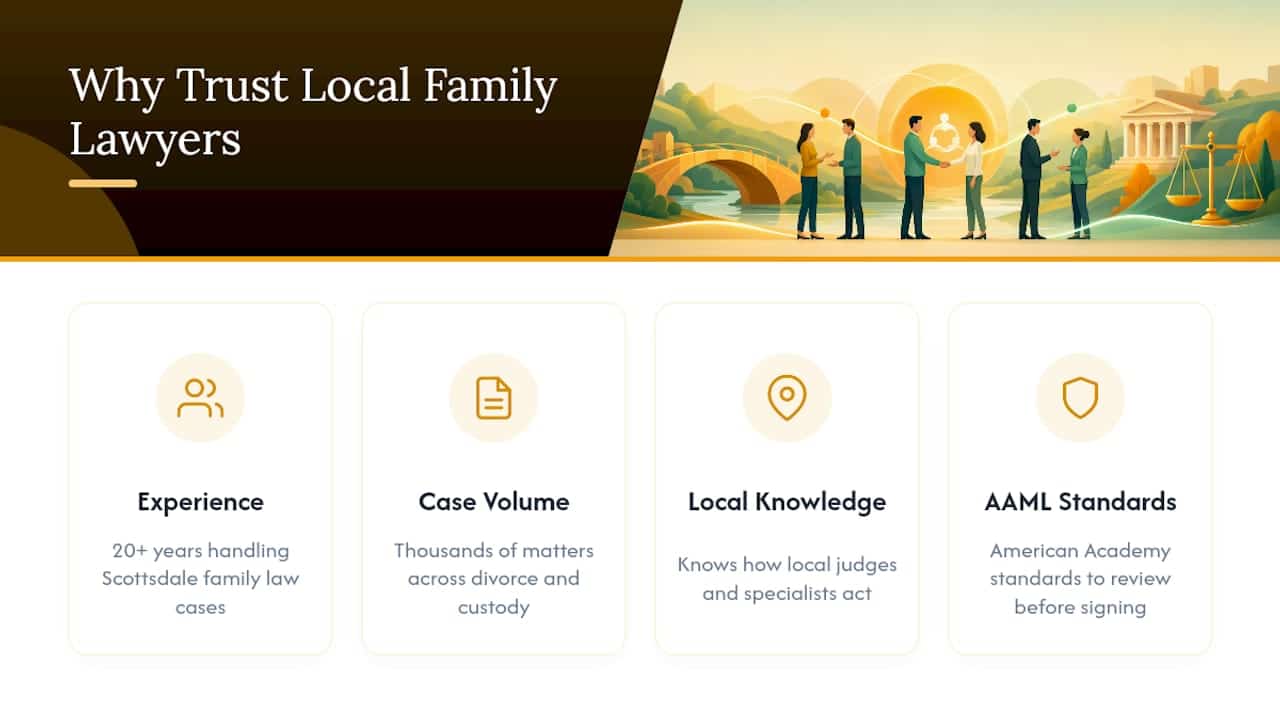
Highdesertfamilylawgroup has spent more than 20 years handling family law cases in Scottsdale, Arizona, including mediation, collaborative divorce, and the messier cases that end up in court. That range matters here: choosing between mediation and collaborative divorce often comes down to details a general search can’t capture, how a specific judge handles contested valuations, or which local specialists collaborative teams actually trust.
The firm has represented clients through thousands of cases across divorce, custody, and related disputes…
For readers weighing attorney qualifications in a collaborative case, the American Academy of Matrimonial Lawyers maintains standards worth reviewing before you sign a participation agreement.
How Do You Decide Right Now?
Before scheduling anything, run through this checklist:
- Safety first: Any history of abuse, threats, or coercion means skip both processes and talk to an attorney about protective options.
- Map your finances: List every account, property, and business interest, then note which ones need professional valuation.
- Assess communication: Can you and your spouse discuss money and parenting without one side shutting down or escalating?
- Consider your children: Would a child specialist help shape custody terms, or is the parenting plan already straightforward?
- Set a budget and timeline: Decide what you can afford and how quickly you need resolution.
In your first consultation, ask: who represents me if this fails, what do sessions cost per hour, how is confidentiality handled, and will we need outside specialists? Bring organized financial documents so the attorney can give you a realistic answer.
Pro Tip: Write your questions down before the consult, it’s easy to forget half of them once the conversation starts.
An Honest Take on Choosing Between the Two
Most people overthink this decision by treating it as a moral choice, cooperative versus adversarial, when it’s really a logistics question. Mediation assumes a baseline of trust that not every couple has, and pretending otherwise just delays the real conversation. Collaborative divorce costs more precisely because it’s built for situations where that trust is thin or the finances are genuinely complicated.
The honest answer is that safety and your children’s stability outrank speed or cost every time. If you’re unsure which path fits, an experienced family law attorney can usually tell within one conversation.
— Brett
How Highdesertfamilylawgroup Can Help You Choose the Right Path
Highdesertfamilylawgroup handles both mediation and collaborative divorce for Scottsdale families, along with the financial planning conversations that come after settlement. That range means you get a straight answer about which process fits your specific finances and family situation, not a one-size-fits-all pitch toward whichever service is easiest to sell.

Before your consultation, gather recent tax returns, account statements, and a list of major assets and debts, the same documents either process will eventually require anyway. If retirement accounts or investment income complicate your case, our financial planning after divorce resources are worth reviewing beforehand. Ready to find out which process fits your case? Schedule a consultation with our team and get a direct answer instead of more guesswork.
This article is general information, not a substitute for advice from a qualified lawyer. Consult a qualified legal professional about your own circumstances before acting on anything here.
Sources
- What Is Mediation and Collaborative Law? – FindLaw
- Mediation vs. Collaboration: Which Is Right for You? – DivorceNet
- Collaborative Divorce vs. Mediation in Texas: Which Is Better? | Thompson Salinas Londergan, LLP
- AAML