



Bring 12 to 24 Months for Arizona Self Employed Child Support

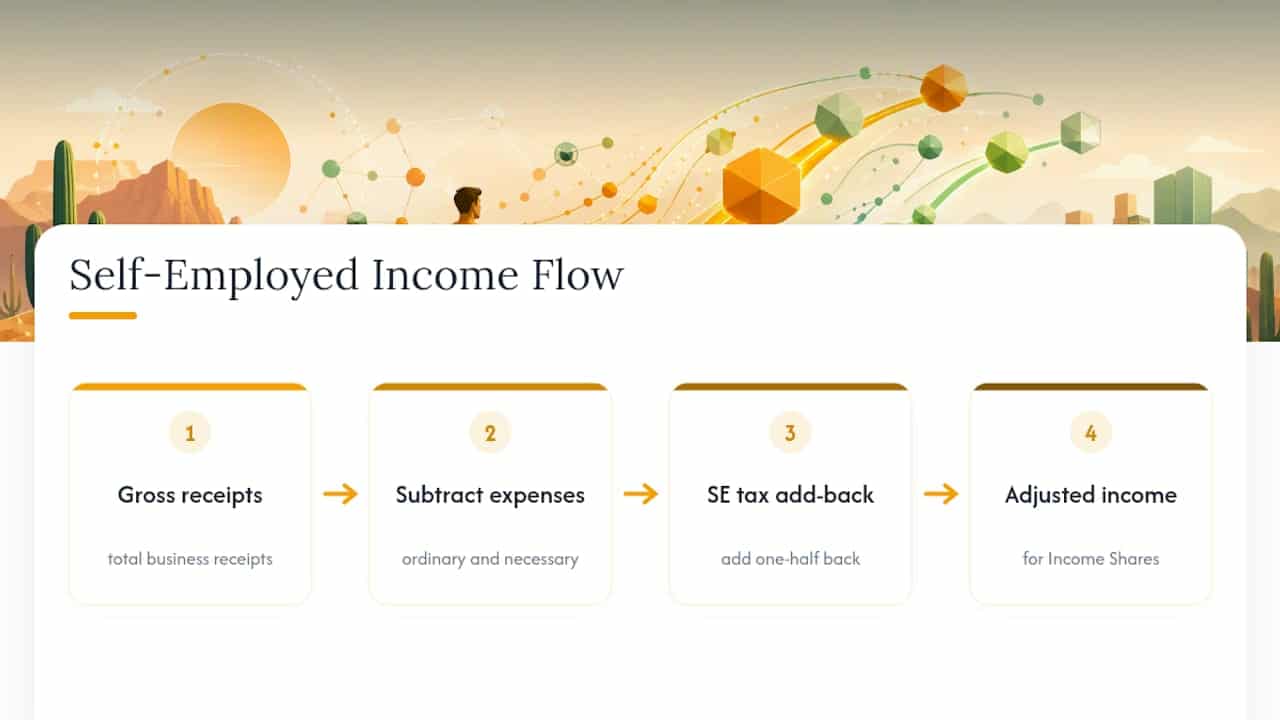
Yes, self-employment counts, and it usually gets more scrutiny, not less. Arizona courts calculate your child support income as gross receipts minus ordinary and necessary business expenses, then add back half of your self-employment tax. If your earnings swing seasonally, a judge can annualize them, and if you look underemployed, the court can impute income at minimum wage. Start now: pull 12 to 24 months of business records, run the Arizona child support calculator, and talk to a tax professional or attorney before you file anything. If the new number differs from your current order by a moderate percentage or a modest dollar amount per month, you likely have grounds to modify.
TL;DR:
- Arizona courts add back half of the self-employment tax to your gross business income when calculating child support, which can impact the support amount.
- Proper documentation, including two years of tax returns, profit and loss statements, and detailed bank records, is crucial to verifying actual income and expenses.
- Courts presume full-time work at minimum wage unless there is evidence of voluntary underemployment, and they may annualize seasonal or fluctuating earnings for a fair assessment.
- Modifications require a substantial change of at least 15% or $50 per month, with supporting financial documentation and proper use of the Arizona child support calculator.
- Court-ordered tax practitioner reviews can verify income claims, and engaging legal counsel early can help navigate complicated bookkeeping and imputed income issues.
Table of Contents
- How Arizona Calculates Child Support for Self-Employed Parents
- Documenting Self-Employed Income: What Judges Actually Scrutinize
- When Courts Impute Income or Average Fluctuating Earnings
- Modifying Child Support After Your Income Changes
- What Happens Procedurally: Reviews, Hearings, and Enforcement
- Lawyer’s Perspective: What Actually Trips Up Self-Employed Parents
- How High Desert Family Law Group Helps Self-Employed Parents
- Sources
- FAQ
How Arizona Calculates Child Support for Self-Employed Parents
Arizona uses the Income Shares Model. The court adds both parents’ incomes together, finds the basic support obligation for that combined total, and splits it proportionally based on who earns what. For example, a parent who earns the majority share of the combined income generally covers a proportional share of the basic obligation, adjusted for parenting time and other factors.
The trickier part for freelancers and business owners is defining “income” in the first place. Under the Arizona Child Support Guidelines, Child Support Income casts a wider net than your tax return’s adjusted gross income. It includes rental income, royalties, bonuses, and business earnings before certain deductions apply, not just W-2 wages.
For a self-employed parent, the formula is gross receipts minus ordinary and necessary business expenses. That sounds like your Schedule C, but it isn’t identical. The guidelines also require adding back one-half of your self-employment tax, since that amount effectively functions as income available to the household rather than a true cost of doing business. A consultant billing $120,000 a year with $40,000 in legitimate expenses doesn’t get treated as an $80,000 earner exactly. The court adjusts for that self-employment tax add-back first, then works the number into the shared calculation.
Documenting Self-Employed Income: What Judges Actually Scrutinize
Courts don’t take your word for it, and they don’t take your accountant’s word for it either. Judges want a paper trail that confirms what you actually made and spent, not what your tax strategy claims.
Expect to gather:
- The last two years of tax returns, including full Schedule C filings and any K-1s
- Profit and loss statements, ideally prepared monthly or quarterly
- Business and personal bank statements showing deposits and transfers
- Invoices, signed contracts, and canceled checks tied to client work
- 1099s from every client or platform that paid you
Here’s where it gets uncomfortable for a lot of self-employed parents: IRS-allowed deductions don’t automatically survive a family court review. A judge can add back personal draws, above-market owner compensation, personal expenses run through the business account, and one-time write-offs that don’t reflect your ongoing earning capacity. If you paid for your truck, your phone, and your gym membership through the LLC, be ready to explain why.
Pro Tip: Keep a business account completely separate from your personal account, even if you’re a solo operator with no employees. Commingled funds are the single fastest way to turn a routine income review into a drawn-out dispute.
When Courts Impute Income or Average Fluctuating Earnings
Arizona presumes every parent is capable of full-time work at least at the applicable minimum wage, per Arizona Revised Statutes §25-320, unless the evidence says otherwise. That presumption matters if you scaled back your business, took an unpaid break, or claim your income is lower than it looks.
If your work is genuinely seasonal, landscaping in the summer, tax preparation in the spring, holiday retail consulting, the court doesn’t just freeze on your slowest month. Judges typically annualize or average income across multiple years to land on a representative monthly figure that reflects your real earning pattern rather than a snapshot.
When a judge is deciding whether to impute income above what you’re reporting, the statute points to several factors: your employment history, education and training, the local job market, childcare obligations, health limitations, and whether you voluntarily cut back your hours or client load. A parent who quit a $90,000 consulting practice to work part-time gig jobs during a custody dispute is going to draw questions. Courts do weigh a parent’s choice to reduce work hours for parenting time against what’s actually in the children’s best interest, and that balancing act cuts both ways depending on the facts.
Modifying Child Support After Your Income Changes
A prior order isn’t permanent just because it’s on paper. Arizona allows modification when the change is substantial and continuing, and the practical benchmark set out in DES guidance is a shift of at least 15% or $50 a month, whichever is less. If you’re in a Title IV-D case, you can also request a review every three years without proving a substantial change at all.
Here’s the practical sequence for filing:
- Run your updated numbers through the Arizona child support calculator to see whether you actually clear the threshold.
- Complete the Child Support Worksheet reflecting your new income figures and attach it to your petition.
- Choose the correct form. A simplified petition works for straightforward, agreed changes; a standard petition fits contested or complex cases.
- Attach supporting documents. Pay stubs won’t cut it for a self-employed filer, so include your P&L statements, bank records, and recent tax filings.
- File with your local Superior Court and follow that county’s specific filing procedures, since counter requirements vary slightly by jurisdiction.
If income was imputed to you rather than calculated from actual records, the worksheet and final order need to state that attribution and the basis for it. Skipping that step creates ambiguity that tends to resurface at the next hearing.
What Happens Procedurally: Reviews, Hearings, and Enforcement
Once a self-employed parent’s income becomes disputed, the court has a specific tool most W-2 households never encounter. Under Arizona Revised Statutes §25-320.02, the judge can order both parents to meet with a federally authorized tax practitioner who reviews the self-employed parent’s records and submits a written report back to the court.
A few things to know about that process:
- The court decides who ultimately pays for the practitioner’s review, though each parent can suggest a practitioner for the job.
- The review focuses on verifying whether reported income and expenses match reality, not on retroactively changing your tax filings.
- A voluntary, proactive review before you even file can sometimes shortcut disputes, since it removes the “the other side’s accountant said so” dynamic from the hearing.
If support goes unpaid, Arizona’s enforcement toolkit includes income withholding orders, judgments for arrears, and after six months of missed payments, the court can require a bond or other security. None of these remedies care whether your income comes from a W-2 or a 1099. They apply the same way once an order is in place and violated.
Lawyer’s Perspective: What Actually Trips Up Self-Employed Parents
The mistakes that sink self-employed parents in these cases are rarely dramatic. It’s usually months of commingled funds, sloppy bookkeeping, or a late estimated tax payment that makes a judge start doubting everything else on the page. Credibility problems compound fast once a court smells inconsistency.
Before filing anything, get 24 months of profit and loss statements, reconciled bank records, full tax returns, receipts for child-related expenses, and an initial run through the Arizona Child Support Guidelines calculator. If the other side is contesting imputed income, if your business has complicated depreciation schedules, or if a tax-practitioner review looks likely, that’s the point to bring in counsel rather than handling it solo.
How High Desert Family Law Group Helps Self-Employed Parents
Self-employed income disputes rarely resolve cleanly on your own, especially once the other side questions your bookkeeping or pushes for imputed income at a higher rate. Highdesertfamilylawgroup works directly with self-employed parents across Scottsdale on child support modification petitions, contested child custody matters, and the negotiation work that often resolves these cases without a drawn-out tax-practitioner review.

Bring your last two years of tax returns, profit and loss statements, bank statements, your current child support order, and any correspondence with DES to your first conversation. That’s what lets an attorney tell you quickly whether your numbers clear the modification threshold or whether you’re better off negotiating a settlement. If mediation looks like a better fit than litigation for your situation, divorce mediation is worth discussing too. Reach out to schedule a consultation on child custody and support matters and get a straight answer on where your case actually stands.
Sources
- Arizona Child Support Guidelines (Superior Court of Maricopa County, 2022)
- Arizona Revised Statutes §25-320
- DES: Modification requests — frequently asked questions
This article is general information, not a substitute for advice from a qualified lawyer. Consult a qualified legal professional about your own circumstances before acting on anything here.
FAQ
Does self-employment income count toward Arizona child support?
Yes. Arizona treats self-employment income as gross receipts minus ordinary and necessary business expenses, with one-half of self-employment tax added back under the Arizona Child Support Guidelines. It counts the same as wage income once that calculation is done.
Can a judge impute income to a self-employed parent?
Yes, if the court believes you’re voluntarily underemployed. Arizona Revised Statutes §25-320 presumes a parent can work full-time at least at minimum wage, and judges weigh factors like your work history, local job market, and childcare duties before attributing a higher figure.
What triggers a child support modification in Arizona?
A modification generally requires a substantial and continuing change, meaning at least a 15% shift or $50 a month difference, whichever is less, according to DES guidance. Title IV-D cases can also request a review every three years regardless of whether income changed.
What is a tax-practitioner review in a child support case?
It’s a court-ordered process under Arizona Revised Statutes §25-320.02 where a federally authorized tax practitioner examines a self-employed parent’s financial records and reports findings to the court. The court decides who pays for it, and both parents can propose a practitioner.
How can High Desert Family Law Group help with a self-employed income dispute?
Highdesertfamilylawgroup represents self-employed parents in Scottsdale on modification petitions, contested child custody cases, and negotiations tied to income disputes. Pricing depends on your case specifics and is available directly through a consultation.