



Understanding lawyer fees for divorce is one of the first things most people need when they start thinking about ending a marriage. Here is a quick snapshot of what to expect in 2026:
| Divorce Type | Typical Total Cost |
|---|---|
| Uncontested (DIY or minimal attorney) | $500 – $4,100 |
| Uncontested (attorney-assisted) | $2,500 – $5,000 |
| Contested (children or assets involved) | $10,000 – $25,000 |
| High-conflict (custody battles, complex assets) | $25,000 – $50,000+ |
Key cost drivers at a glance:
- Attorney hourly rates nationally average $270 – $374, with Florida averaging around $374/hour
- Most attorneys require a retainer upfront — typically $3,000 – $10,000
- Florida’s court filing fee is $409 plus $10 for the summons
- The national average total divorce cost (with children) is approximately $15,300
- About 90% of divorces settle before trial, which significantly reduces costs
The hard truth is that divorce is expensive — and the less you and your spouse agree on, the more expensive it gets. Every contested issue, from who keeps the house to who has custody of the kids, adds attorney hours and court time. Even routine emails and short phone calls are typically billed in six-minute increments, so costs add up faster than most people expect.
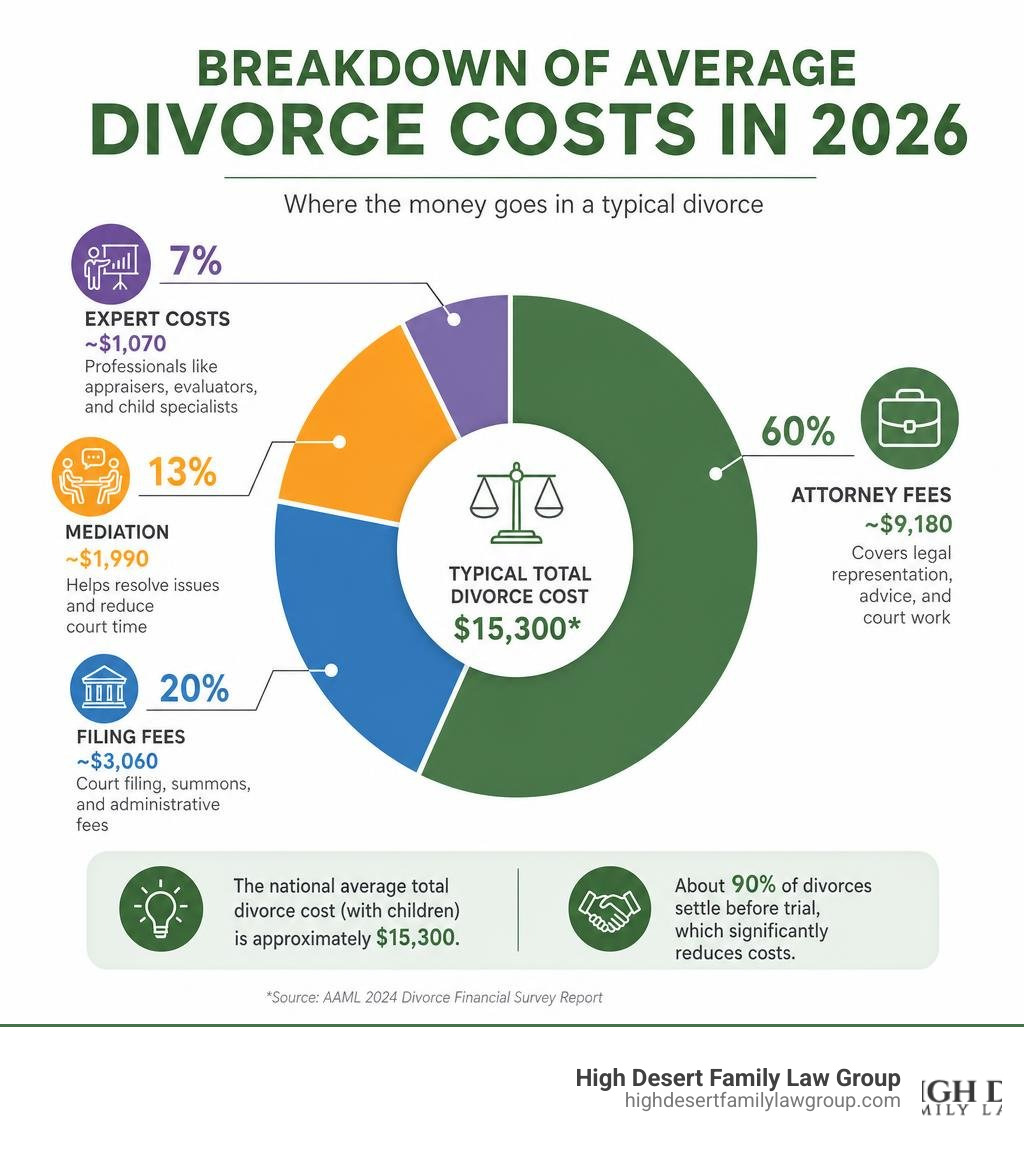
When you hire a family law attorney in Arizona, you will generally encounter two primary billing structures: hourly billing and flat fees. Understanding the difference between these models—and how they impact your overall financial planning—is crucial before signing any representation agreement.
Hourly Billing: The Standard Model
The vast majority of family law firms use hourly billing. Under this model, you pay for the exact amount of time the legal team spends working on your case. This includes drafting documents, attending court hearings, conducting legal research, and even reading or responding to your emails and phone calls.
In the Greater Scottsdale and Chandler areas, hourly rates for family law attorneys typically range from $200 per hour for newer associates to $600 or more per hour for highly experienced partners. Because family law attorneys bill in six-minute increments (0.1 of an hour), even a brief exchange can add up.
To get started, hourly attorneys require a retainer. You can think of a retainer as a secured deposit account. You pay a lump sum upfront, and the attorney draws their hourly fees from this account as they perform work.
To learn more about how these structures operate, read our comprehensive guide on How Much Does A Divorce Lawyer Cost Average Price Ranges Explained.
Flat-Fee Billing: Predictable but Limited
Some attorneys offer flat-fee billing for highly specific, limited-scope tasks or entirely uncontested divorces. In a flat-fee arrangement, you pay a single, predetermined price for your legal representation regardless of how many hours the attorney spends on the case.
While flat fees offer excellent predictability, they are rarely used in contested divorces. If a case becomes adversarial, a flat-fee structure can fall apart because it is impossible to predict how many hours of litigation will be required. Furthermore, consumers should be cautious of unusually low flat fees, as they may indicate that an attorney lacks the incentive or resources to thoroughly protect your long-term financial interests.
Before committing to any pricing model, it is vital to understand the terms of your agreement. To dive deeper into how initial payments are managed, review our breakdown of the Divorce Lawyer Retainer Fee.

Average Cost of Divorce: Uncontested vs. Contested Cases
The single greatest variable in the total cost of a divorce is the level of conflict between you and your spouse. When spouses agree on all key issues, the process is swift and relatively inexpensive. When they do not, expenses mount quickly.
Uncontested Divorces
An uncontested divorce occurs when both parties reach a mutual agreement on asset division, spousal support, and child custody without requiring court intervention to resolve disputes.
For couples who can successfully navigate this path, the financial relief is substantial. An attorney-assisted uncontested divorce in Arizona typically ranges from $2,500 to $5,000 in total legal fees. For more details on these streamlined proceedings, check out our resource on Uncontested Divorce Cost.
Contested Divorces
A contested divorce means there is a disagreement on at least one major issue. This triggers a formal legal process involving discovery, motions, hearings, and potentially a trial.
Contested divorces regularly cost between $10,000 and $25,000. In high-conflict situations—especially those involving hidden assets, complex business valuations, or intense custody battles—costs can easily escalate to $25,000 to $50,000 or more. To understand why these cases cost more and how to budget for them, see our detailed guide on Contested Divorce Cost.
To put these numbers in perspective, we can look at national benchmarks. For instance, the median cost of a divorce in Missouri is approximately $13,500, but couples who resolve their differences out of court can finalize their case for under $2,500. You can read more about these regional comparisons in How Much Does a Divorce Cost in Missouri? Complete 2026 Guide to Fees, Attorney Costs & Hidden Expenses.
Cost Comparison Table
| Case Type | Attorney Involvement | Average Total Cost (AZ) | Primary Cost Drivers |
|---|---|---|---|
| Simple Uncontested | Document preparation & filing assistance | $1,500 – $3,000 | Filing fees, basic drafting |
| Mediated Divorce | Mediation sessions & settlement drafting | $3,000 – $8,000 | Mediator fees, document review |
| Moderately Contested | Negotiation, temporary orders, discovery | $10,000 – $20,000 | Hourly attorney rates, depositions |
| High-Conflict / Trial | Full litigation, custody evaluations, trials | $25,000 – $50,000+ | Expert witnesses, court appearances |
Who Pays Attorney’s Fees in a Divorce Case?

A common point of anxiety for spouses with fewer financial resources is how they will afford competent legal representation. Fortunately, family law courts have mechanisms to ensure a level playing field.
In Florida, family courts rely on Section 61.16 of the Florida Statutes to decide who pays attorney’s fees. Landmark Florida cases like Rosen v. Rosen established that while financial disparity is the primary factor, judges must also evaluate the parties’ conduct during litigation. Furthermore, Wrona v. Wrona determined that if one spouse causes completely avoidable litigation, the court can adjust the marital asset division so the responsible party bears those costs.
While those specific statutes and cases govern Florida, Arizona operates under a highly similar philosophy. Under A.R.S. § 25-324, Arizona courts evaluate the financial resources of both parties as well as the reasonableness of each party’s positions throughout the proceedings.
The core purpose of these laws is to prevent a “legal mismatch” where one wealthy spouse can afford aggressive representation while the other is left with no voice in court. To learn more about how judges assign these financial responsibilities, read our article on Who Pays Attorney Fees In Divorce.
How Courts Determine Lawyer Fees for Divorce Awards
When a judge in Arizona evaluates a request for attorney’s fees under A.R.S. § 25-324, they look closely at several factors:
- Financial Disparity: The court compares each spouse’s income, earning potential, and liquid assets. If one spouse earns $150,000 per year and the other has been a stay-at-home parent with zero independent income, the higher-earning spouse will likely be ordered to contribute to the other’s legal fees.
- Reasonableness of Positions: If one party takes highly unreasonable positions—such as refusing to compromise on minor issues, failing to disclose financial documents, or filing frivolous motions—the judge can order them to pay the other spouse’s fees as a sanction.
- Temporary vs. Final Fees: Courts can award “interim” or temporary attorney’s fees early in the divorce process to ensure both parties have representation during the litigation. Final fee awards are determined at the end of the case.
Court Costs, Filing Fees, and Hidden Expenses
Attorney fees make up the largest portion of your divorce budget, but they are not the only expenses you will encounter. A successful financial plan must account for court costs and administrative fees.
To initiate a divorce in Arizona, you must pay a mandatory filing fee. In Maricopa County, the initial filing fee for a Petition for Dissolution of Marriage is approximately $349, though fees can vary slightly by county and are subject to periodic adjustments. You can verify the most current rates directly through the Filing Fees | Maricopa County Clerk of Superior Court.
Other routine court-related expenses include:
- Service of Process: Having a professional process server or sheriff formally deliver the divorce papers to your spouse typically costs $50 to $100.
- QDRO Preparation: If you are dividing an employer-sponsored retirement account, such as a 401(k) or pension, you must hire a specialist to draft a Qualified Domestic Relations Order (QDRO). This specialized service generally costs between $500 and $2,500.
- Expert Witnesses: In complex cases, you may need to hire real estate appraisers, child custody evaluators, or forensic accountants to value a family business. These professionals charge their own independent hourly rates, which can quickly add thousands of dollars to your total bill.
Strategies to Reduce Lawyer Fees for Divorce Cases
If you want to keep your divorce costs as low as possible, there are several highly effective strategies you can employ:
- Leverage Mediation: Rather than paying two separate attorneys to fight in court, couples can work with a neutral third-party mediator to resolve their disputes. Mediation is highly effective, with a large majority of cases settling successfully out of court.
- Organize Your Financial Documents: Attorneys charge by the hour. If you hand your legal team a messy shoebox of loose receipts and unorganized bank statements, you will pay hundreds of dollars per hour for an assistant or paralegal to organize them. Do the prep work yourself.
- Communicate Efficiently: Consolidate your questions into a single, comprehensive email rather than sending multiple short messages throughout the day. This reduces the number of administrative billing increments charged to your account.
- Focus on the Big Picture: Do not spend $1,000 in attorney fees arguing over a household appliance worth $200. Treat the divorce as a business transaction and keep emotional disputes out of your financial negotiations.
Frequently Asked Questions About Divorce Costs
What is the average retainer fee for a divorce lawyer?
A typical retainer fee for a family law attorney in Arizona ranges from $3,000 to $10,000, depending on the complexity of your case and the attorney’s hourly rate. This money is placed into a trust account, and the attorney bills against it as they work.
To learn more about how these upfront deposits are structured and what happens to any remaining funds, read our guide on What Is The Average Retainer Fee For A Divorce Lawyer.
Can I get a divorce if I cannot afford a lawyer?
Yes. If you cannot afford to pay court fees, you can file a financial hardship affidavit to request a deferral or waiver of your court filing fees. For legal representation, low-income individuals can seek assistance through local legal aid organizations, pro bono programs, or family law clinics. Additionally, many couples successfully navigate uncontested divorces on their own using standardized self-help forms provided by the Arizona court system.
How do child custody disputes affect the total cost of divorce?
Child custody disputes are one of the most common drivers of high-conflict, high-cost divorces. When parents cannot agree on a parenting plan, the court may order a professional custody evaluation or appoint a Guardian ad Litem (GAL) to represent the best interests of the children. These evaluations and court-appointed professionals can add $3,000 to $10,000 or more to the total cost of your divorce.
Conclusion
Navigating the financial realities of a divorce can feel overwhelming, but you do not have to do it alone. Understanding how lawyer fees for divorce are structured is the first step toward regaining control of your financial future. Whether you are dealing with complex asset division, spousal support negotiations, or other complex family law matters, having the right legal team by your side makes all the difference.
At High Desert Family Law Group, we provide aggressive, individualized representation tailored to the unique needs of our clients throughout Greater Scottsdale and Chandler, Arizona. Our dedicated four-person legal team works collaboratively to protect your rights, your assets, and your family’s well-being.
If you are preparing for a divorce and want to understand your options, we are here to help. Contact us today to learn more about our services and secure a clear financial roadmap for your case. To take the first step toward protecting your future, review our essential guide on the Divorce Lawyer Retainer Fee and schedule your consultation.